
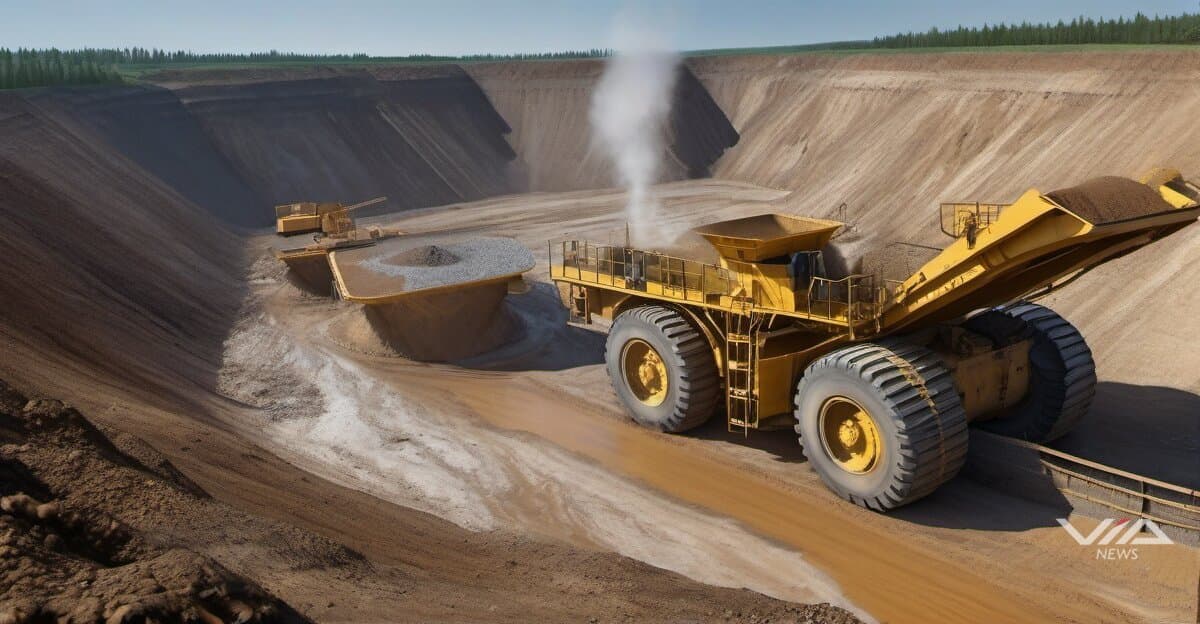
A significant chapter in European mining has opened with the extraction of first ore at DPM Metals' Čoka Rakita gold project in Serbia, a milestone that signals the Balkan country's growing role as a destination for large-scale mineral investment.
The underground mine, situated 35 kilometres northwest of Bor in eastern Serbia — a region with a centuries-long mining heritage — has moved from discovery to first production in under three years, an unusually swift timeline for a project of this scale. DPM Metals announced the completion of a robust feasibility study in November 2025, and the project has since advanced to active extraction.
A Project Built on Strong Economics
The financials underpinning Čoka Rakita are compelling by any measure. At a gold price of $1,900 per ounce, the project delivers an after-tax net present value (NPV) of $782 million and an internal rate of return (IRR) of 36%, with an initial capital outlay of $448 million expected to be recovered within just 1.8 years of production commencing.
The mine holds probable reserves of 7.34 million tonnes grading 6.44 grams of gold per tonne, containing 1.52 million ounces — a 10% improvement in tonnage and an 11% increase in contained ounces over the preceding pre-feasibility study. Annual throughput is planned at 850,000 tonnes of ore, generating an average of 148,000 ounces of gold per year across the mine's life, with peak output of around 247,000 ounces forecast for 2031.
All-in sustaining costs are projected at $644 per ounce, placing Čoka Rakita firmly in the first quartile globally for cost efficiency — a critical advantage in a commodity market where margins can be volatile.
Underground Method and Processing
The mine employs underground long-hole open stoping with cemented paste backfill, accessed via two declines and a spiral ramp. Ore will be processed through a combination of doré production, gravity concentration, and flotation, achieving an average metallurgical recovery of 87.9%. The processing plant alone accounts for $63 million of the initial capital, with a further $52 million allocated to tailings management and water treatment infrastructure — an indication of the environmental standards being applied.
Balkan Mining in the European Frame
For Europe, Čoka Rakita arrives at a moment of heightened focus on domestic raw materials supply. The European Union's Critical Raw Materials Act has placed renewed emphasis on securing mineral production within or near the continent, and Serbia — though not yet an EU member — is a candidate country with deep economic ties to the bloc. Investment of this magnitude, backed by a company with zero debt and approximately $414 million in cash reserves as of late 2025, lends credibility to Serbia's ambitions as a mining jurisdiction.
DPM Metals, listed on both the Toronto and Australian stock exchanges, brings operational experience from its nearby Chelopech mine in Bulgaria, making Čoka Rakita a natural geographic extension of its Balkan portfolio.
With gold prices in recent years trading well above the $1,900 base case used in the feasibility model, the project's economics may prove even more favourable than projected. At $2,500 per ounce, the NPV rises to $1.317 billion; at $3,500 per ounce, it reaches $2.207 billion — figures that underscore why Čoka Rakita has drawn sustained investor attention.
First ore at the surface marks not just an operational beginning, but a statement of intent: the Balkans remain a frontier for European mining, and Serbia is open for business.