Friday, 16 October 2026European Markets

Energy Security

3 articles

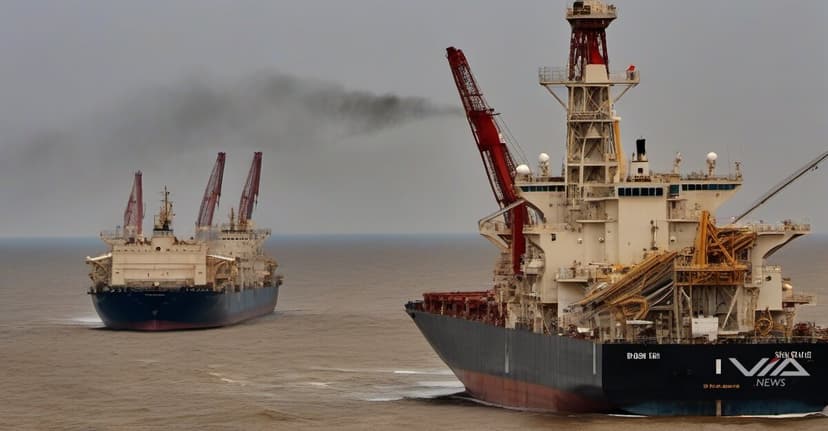
Nine Weeks of Hormuz Closure Risks 1970s-Scale Energy Shock for Europe

Nine Weeks of Hormuz Closure Risks 1970s-Scale Energy Shock for Europe

The Strait of Hormuz closure is entering its ninth week following a US-Israel military strike on Iran, with economists comparing the shock to the 1970s oil crises. Stagflation risks are mounting as demand destruction spreads from Asian markets into Western economies. European policymakers face constrained options as inflation pressure collides with already-fragile growth.

LM Salvado•

Economists Warn Middle East Conflict Could Trigger 1970s-Style Oil Shock for Europe

Economists Warn Middle East Conflict Could Trigger 1970s-Style Oil Shock for Europe

A Middle East conflict threatening the Strait of Hormuz has drawn warnings from top economists of an energy crisis rivalling the 1970s. IMF chief economist Pierre-Olivier Gourinchas says the shock could drive unemployment and food insecurity across multiple countries. Without a resolution, economist Justin Wolfers warns elevated energy costs could persist for years — a direct threat to Europe's energy-dependent economy.

LM Salvado•
Hormuz blockade removes 20M barrels daily, pushing UK mortgage rates up as inflation delays easing until 2026

Hormuz blockade removes 20M barrels daily, pushing UK mortgage rates up as inflation delays easing until 2026

The Middle East conflict has cut 20 million barrels per day from global oil markets through a Hormuz Strait blockade, according to MacroEdge Research. Resulting inflationary pressure is forcing the Bank of England to hold rates at 3.75% while UK mortgage lenders raise borrowing costs, with Federal Reserve officials warning price pressures won't ease before late 2026.

ViaNews Editorial Team (Europe)•
What we know · the intelligence behind this page
Live from the substrate
What we're seeing
Q4 2026 Biopharma Catalyst Cluster: Late-Stage Readouts and Regulatory Milestones
October 2026 brings a dense run of Phase 3 wins (ALOFT-IPF, RESTORE-3), new data presentations (Roche, Bayer, Lilly, Vertex, Galderma) and regulatory steps (FDA acceptance of Roche's vamikibart BLA, Scholar Rock's EMA resubmission). The next big catalyst is the ivonescimab FDA PDUFA date on 2026-11-14. Obesity combination studies (REDEFINE 4, TOGETHER-PsO) and the 2027 Maritime-1 completion point to more catalysts ahead. QAIAx's speculative AI-linked trial claims (the QIII pilot, targeted for 2027) are an unrelated micro-cap sideshow with weak evidence, and have little in common with the large-cap pipeline news.
Our read on the data ›
Signals we're tracking
EPKINLY Regulatory-Clinical Success Cascade
High probability of expanded label indications, additional combination approvals, and competitive positioning strength in follicular lymphoma market. Predicts positive commercial uptake and potential accelerated review for related indications.
Patterns we're watching ›
Where sources disagree
ING Group
Both facts record the same metric (shares_outstanding) for ING Group at the identical observation date (2025-12-31). FACT A states 2,902,437,688 shares; FACT B states 2,902 million shares (2,902,000,000). The difference is 437,688 shares (~0.015%). This is a genuine value conflict, though the discrepancy appears to result from FACT B rounding to the nearest million while FACT A provides the precise count.
We flag conflicts openly ›
Recently verified
✓ Checked against the original source
4,986
facts traced to their source — and we flag the ones that don't hold up.
101 entities tracked4,986 facts checked against source5,378 source documents archived
Query this data → isubstrate.com