
Friday, 16 October 2026European Markets

GM's 2028 Battery Tech Aims for 'Several Thousand Dollars' Cost Cut as European Rivals Face Margin Pressure

General Motors plans to launch LMR battery chemistry in 2028 with cost reductions of several thousand dollars per cell and pack, the company disclosed in its Q4 2025 earnings call. The move comes as GM reports profitability across all EV price points in China, where it sold 1 million NEVs in 2025. European automakers face intensifying competition from cost-focused battery strategies amid tightening emissions regulations.

GM's 2028 Battery Tech Aims for 'Several Thousand Dollars' Cost Cut as European Rivals Face Margin Pressure
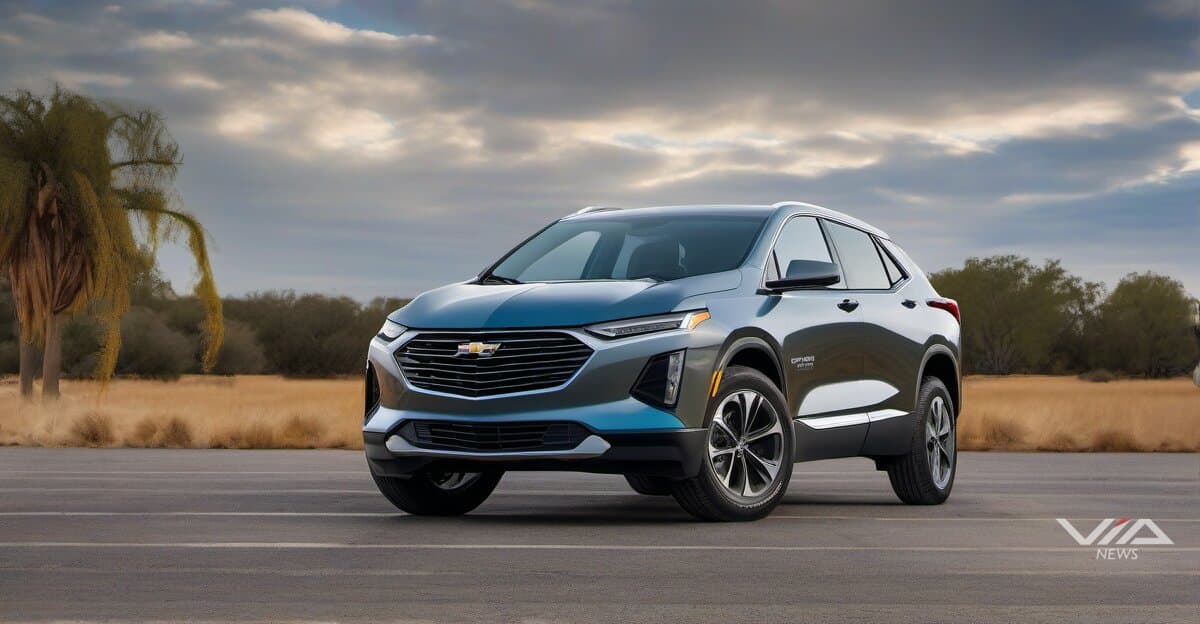
Image generated by AI for illustrative purposes. Not actual footage or photography from the reported events.
Loading stream...

General Motors will launch LMR (lithium-metal-rich) battery chemistry in 2028, targeting cost reductions of several thousand dollars per cell and pack, CEO Mary Barra announced during the company's January 2026 earnings call.

The American automaker reported $12.7 billion in adjusted EBIT for 2025 and guided for $13-15 billion in 2026. GM achieved profitability across all EV price points in China, where 1 million of its 2 million vehicles sold were new energy vehicles.

European manufacturers face mounting pressure from GM's battery cost strategy. Volkswagen, Stellantis, and Renault have invested billions in battery partnerships but struggle with EV margins. VW's PowerCo targets 2025 production start for unified cells, while Stellantis relies on joint ventures with Samsung SDI and LG Energy Solution.

GM took $7.6 billion in EV-related charges in late 2025, including $3 billion in noncash impairments and $4.6 billion in contract cancellations. The company discontinued BrightDrop and converted its Orion Assembly plant from EV to ICE production. These capacity cuts will deliver $1-1.5 billion in benefits during 2026 through lower fixed costs.

The LMR chemistry launch aligns with European emissions standards tightening in 2025-2030. EU regulations require 80% fleet emissions cuts by 2030, pushing manufacturers toward affordable EVs. GM's battery cost target directly challenges European makers on price competitiveness.

GM spent $10.6 billion in automotive free cash flow in 2025 and projects $9-11 billion for 2026. Capital expenditure will run $10-12 billion annually through 2027, with $5 billion allocated to US manufacturing expansion.

The company faces $3-4 billion in tariff costs for 2026, assuming 15% on Korean imports versus 25% previously modeled. This compares to $3.1 billion in 2025 tariff expenses, which GM offset by over 40% through cost initiatives.

European automakers must match GM's battery economics or risk market share losses in both China and North America. BMW, Mercedes-Benz, and Volvo have announced billion-euro battery investments, but production timelines lag GM's 2028 target. Regulatory compliance credits, worth $500-750 million annually to GM, add urgency to European cost-cutting efforts.

Source documents

Via News is a conduit. We point to the source documents behind this report — we don't replace them. Trace any claim to its source and decide what to trust. How we source

Source Trace Score1 source document1 with a live linkVerifiability: Basic
  1. [1]News articleYahoo Finance· January 27, 2026
    GM (GM) Q4 2025 Earnings Call Transcript

In this story · Knowledge Files

What we know · the intelligence behind this page
Live from the substrate
What we're seeing
Q4 2026 Biopharma Catalyst Cluster: Late-Stage Readouts and Regulatory Milestones
October 2026 brings a dense run of Phase 3 wins (ALOFT-IPF, RESTORE-3), new data presentations (Roche, Bayer, Lilly, Vertex, Galderma) and regulatory steps (FDA acceptance of Roche's vamikibart BLA, Scholar Rock's EMA resubmission). The next big catalyst is the ivonescimab FDA PDUFA date on 2026-11-14. Obesity combination studies (REDEFINE 4, TOGETHER-PsO) and the 2027 Maritime-1 completion point to more catalysts ahead. QAIAx's speculative AI-linked trial claims (the QIII pilot, targeted for 2027) are an unrelated micro-cap sideshow with weak evidence, and have little in common with the large-cap pipeline news.
Our read on the data ›
Signals we're tracking
EPKINLY Regulatory-Clinical Success Cascade
High probability of expanded label indications, additional combination approvals, and competitive positioning strength in follicular lymphoma market. Predicts positive commercial uptake and potential accelerated review for related indications.
Patterns we're watching ›
Where sources disagree
ING Group
Both facts record the same metric (shares_outstanding) for ING Group at the identical observation date (2025-12-31). FACT A states 2,902,437,688 shares; FACT B states 2,902 million shares (2,902,000,000). The difference is 437,688 shares (~0.015%). This is a genuine value conflict, though the discrepancy appears to result from FACT B rounding to the nearest million while FACT A provides the precise count.
We flag conflicts openly ›
Recently verified
✓ Checked against the original source
4,986
facts traced to their source — and we flag the ones that don't hold up.
101 entities tracked4,986 facts checked against source5,378 source documents archived
Query this data → isubstrate.com